



We had so much fun making these DIY garden stones. Follow along and learn how to make cement garden stones yourself! 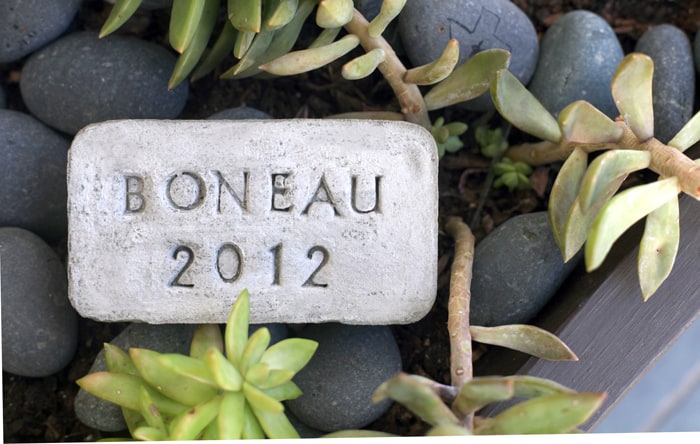
It’s time to make a concrete Garden Stone. Are you ready? This is the perfect time to hang out at home and create some.
Pick up some cement or have some cement mix delivered to your door by Amazon (affiliate link.)
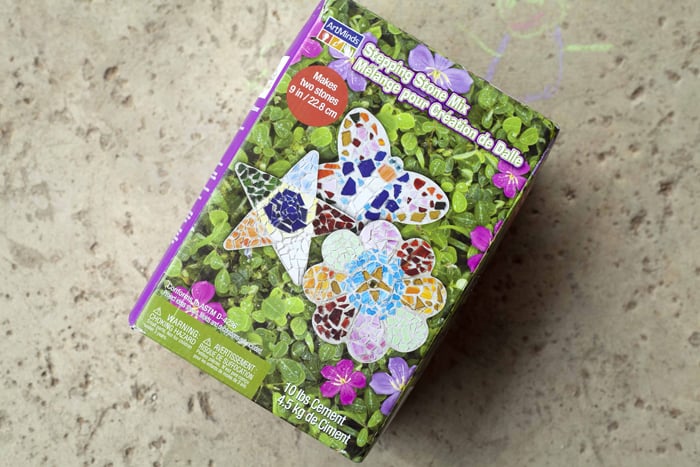
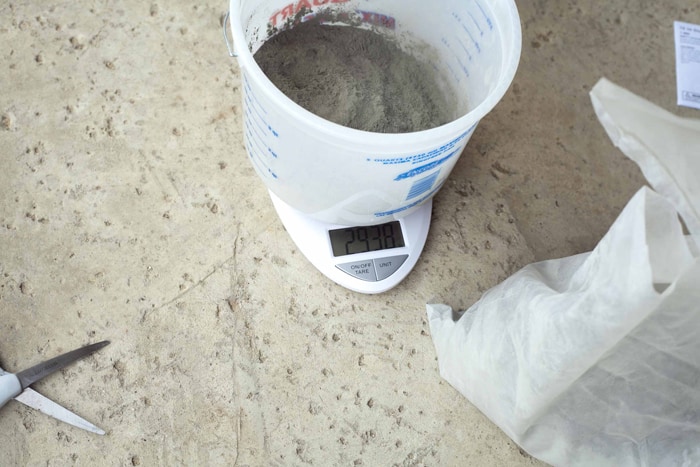
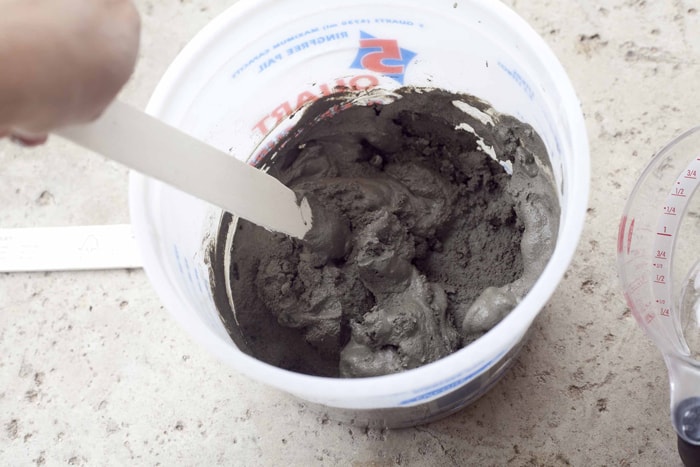
I measured out 2.5lb on my handy food scale. Glad it’s finally getting some use.
Add one cup water. Just enough to moisten all of the cement. No more.
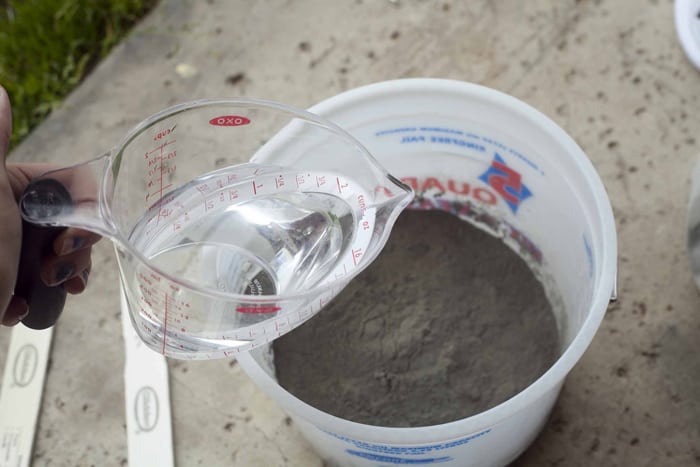
Stir until no cement is left dry.
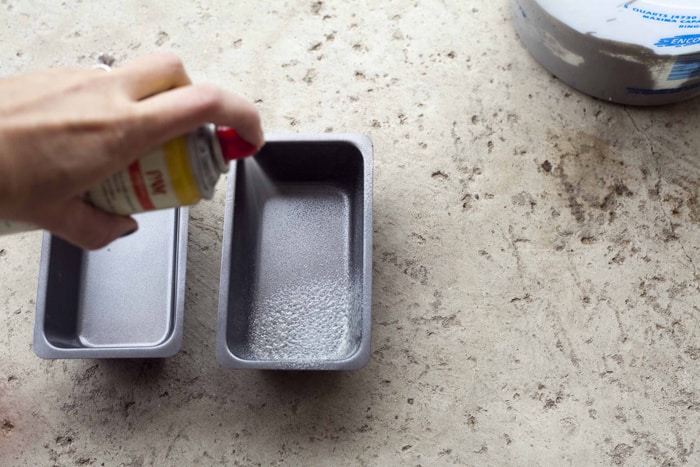
Prepare your mold. If you are using something inflexible like these mini loaf pans, coat them with oil or Pam. If you are using a flexible plastic mold or milk carton or such, you shouldn’t need to do so.
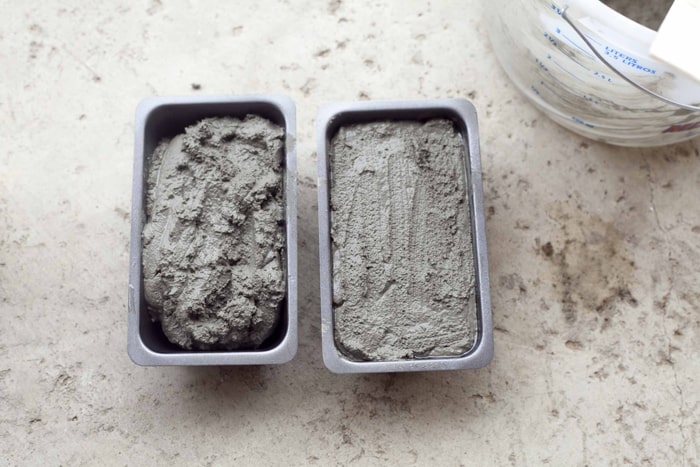
Add cement to pans and smooth top. Tap mold on hard surface to level and release trapped air, if possible.
If you are going to add tiles to your stone, now is the time to do so.
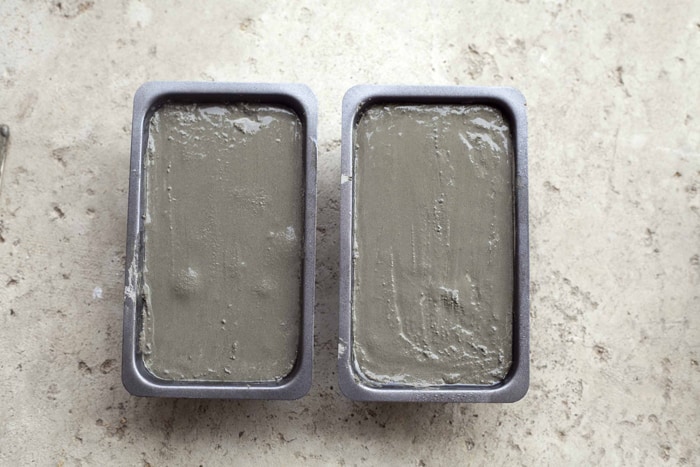
If you are just going to do the stamped “engraved” letters, set a timer for 30 minutes.
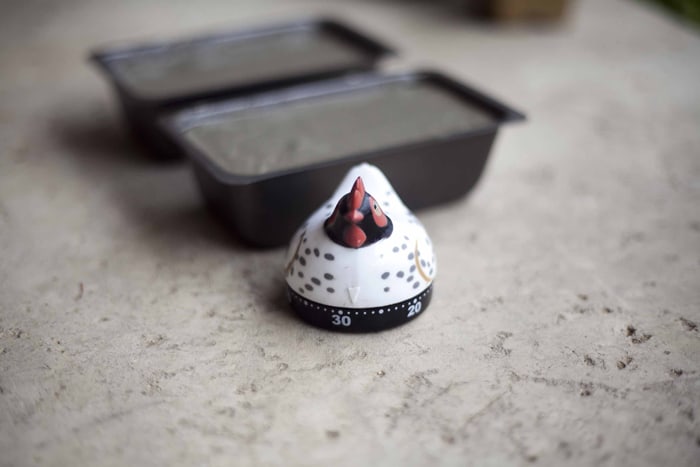
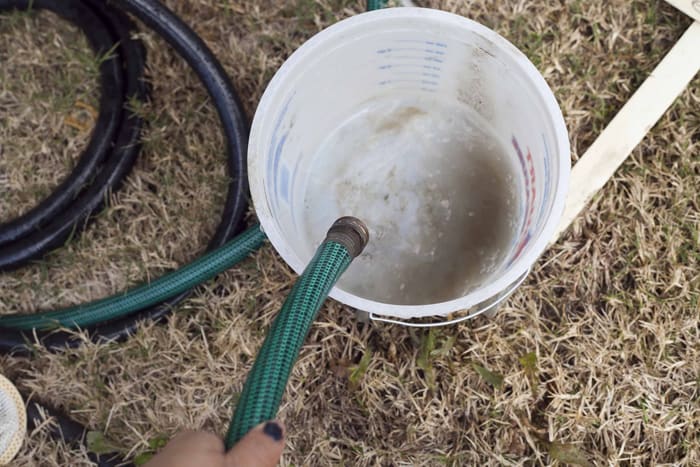
Maybe use this time to clean your tools. Clean cement outside so you don’t destroy your plumbing.
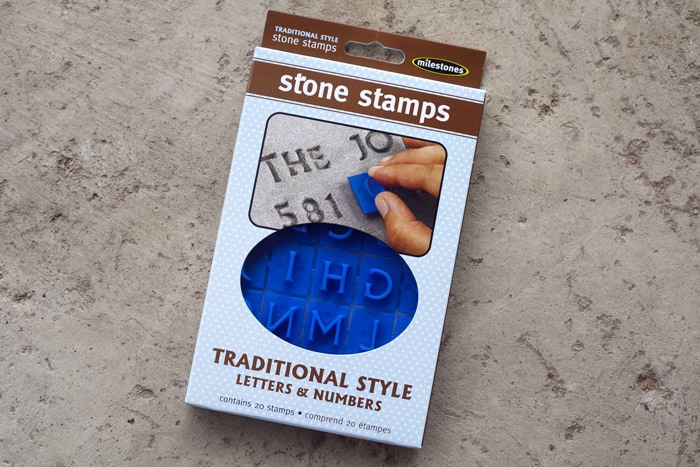
If you want your stone to look like ours, pick up these Stepping Stone Stamps (affil link).
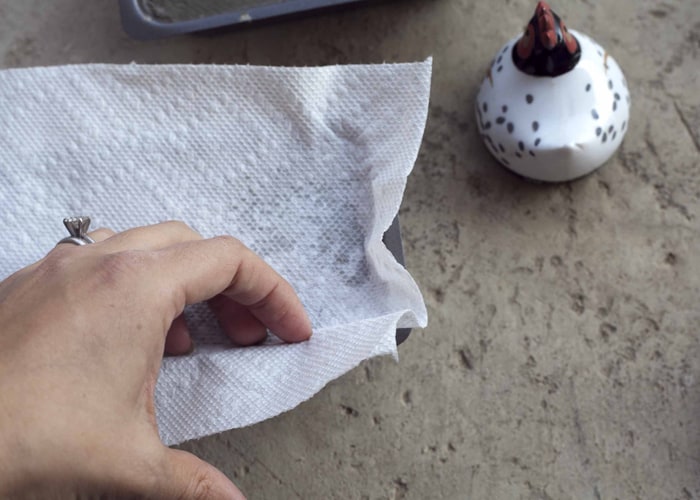
Take a peek at your cement. If water is accumulating on top, dab it dry with a paper towel.
At about 30 minutes, scratch the surface with a toothpick, if it makes a “dry” mark, you are ready. If not, wait about 10-15 more minutes. I did one stone at 30 minutes and one at 40 minutes and the 40 minute stone held its letter shapes better.
Stamp your letters. You can make small lines to use as guides, to stamp on a straight line or to find your center. Start with the center letters and work your way out to the edge.
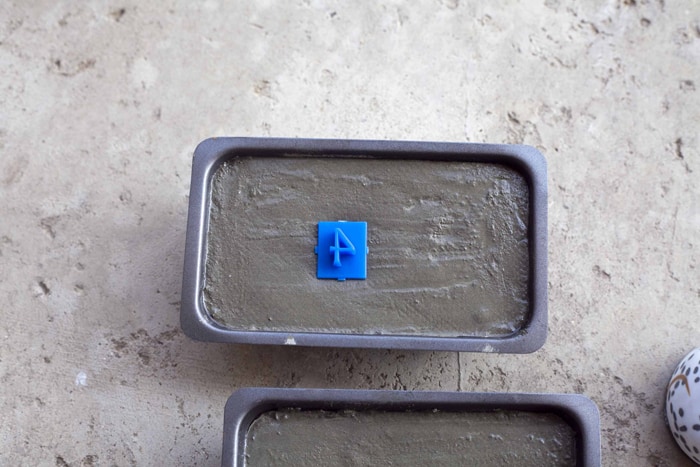
Am I a nerd for thinking this is awesome? yes.
·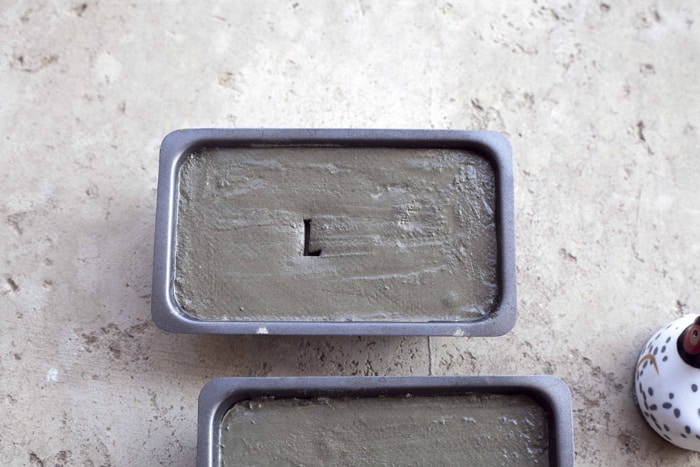
keep stamping. If you mess up, you should be able to smooth out the surface and restamp. At 30 minutes, I was able to do so.
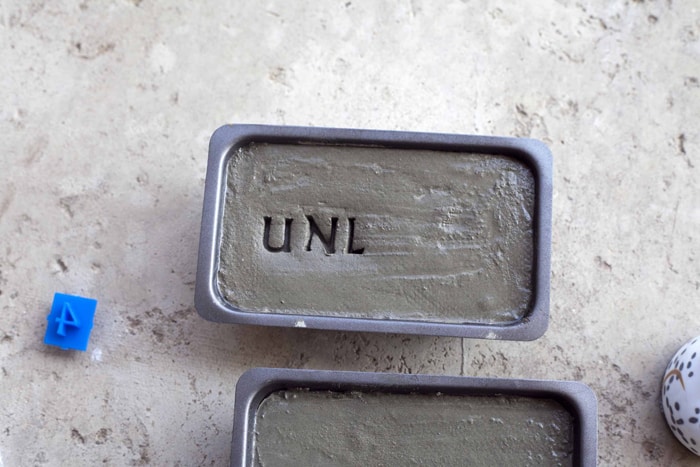
LOVE! But see how the little piece of the “E” broke?
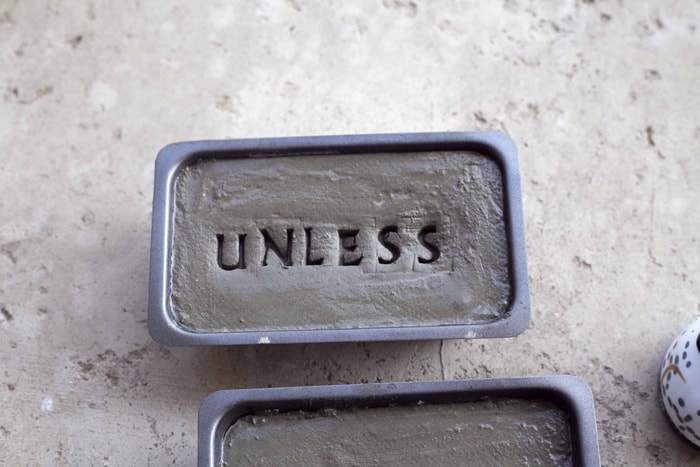
Try to fix that with a toothpick.
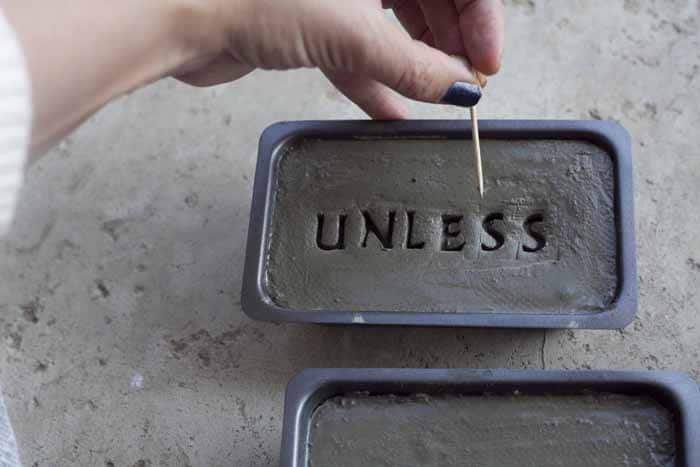
Worked pretty well!
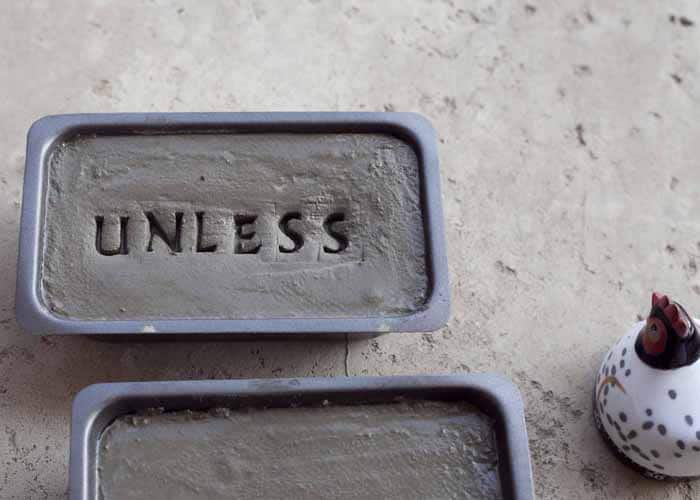
Now smooth any unwanted marks or guidelines with a clean dry fingertip.
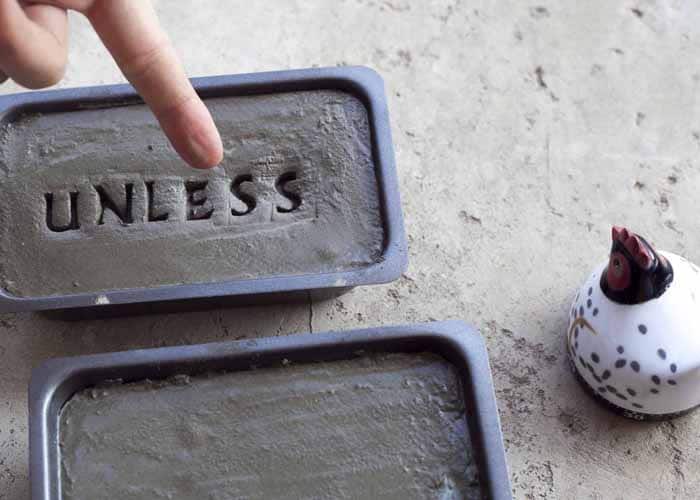
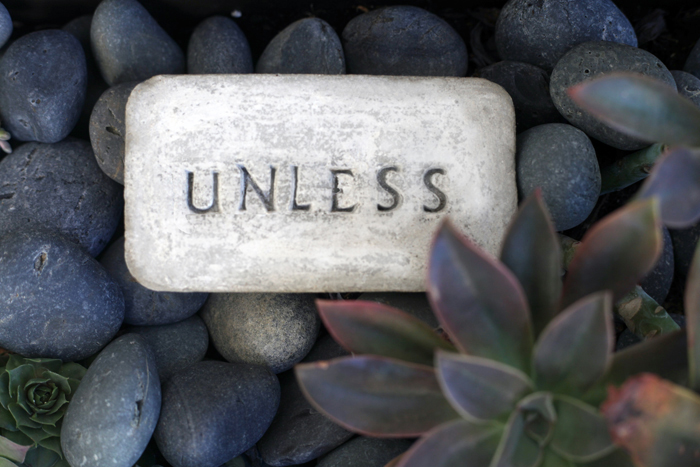
And that’s it! Let it dry undisturbed for 24 hours.
But now you have all that cement, why not make more?
Wondering why one says “UNLESS?” At the end of the book/movie, The Lorax (affiliate link) the Lorax leaves you with a single word carved in stone. UNLESS. Since it’s time to get green in the garden, at least in Texas & California, we were inspired to show you how to make an UNLESS garden stone. Of course you don’t have to do UNLESS but Lorax fans will love the inside reference. Doesn’t every garden need a little Seuss?
Are you excited that you’ve learned how to make cement garden stones? We hope so! Visit our Garden and Flowers section for more beautiful outdoor projects like How to Build a Raised Garden Bed, and follow us on Pinterest for even more inspiration and tutorials.
This post has been edited (2020) but was originally sponsored by Universal Pictures and The Lorax in 2012.

I’m kinda in love with this 🙂 And I can’t wait to see the show!
I love playing with cement from stones to pots for plants. this past fall i helped my grandkids make stepping stones and a couple of pots that they decorated with small stone and gems. We have let them sit outside to weather so that they can plant them this summer. Keep up the great job of stoning,. I enjoy seeing what everyone comes up with.
Love this! These would be super fun ways to label plants in the garden! Can’t wait to try!
What a brilliant idea. I plan on doing a lot of work in our garden this Spring. The kids will love making some of these.
I am reading through the book “Edible Front Yard” by Ivette Soler and this would be PERFECT in my front yard garden!! (http://www.amazon.com/Edible-Front-Yard-Grow-More-Beautiful/dp/1604691999/ref=sr_1_1?ie=UTF8&qid=1329227996&sr=8-1)
Can’t wait to plant my garden and then make it awesome with your “rock” idea!!
Ivette is so awesome! She told us how to plant a lettuce lawn instead of grass. So glad you are enjoying her book!
SUCH an awesome idea!
This is one of the best DIY gardening projects I’ve ever seen! I always love cement stones but thought they would be too difficult to make myself. I think my backyard needs a bunch of these strategically hidden in every nook and cranny.
I’m a bridge engineer, so I’m always excited about concrete – precast, prestressed, reinforced and otherwise. In other news, the building material that you made those garden doodads out of is concrete, not cement (actually it was probably technically mortar, which is cement and small aggregate, whereas concrete also includes large aggregate). Cement is the binding agent used to create concrete. Once you add other stuff like that aggregate and water, it becomes something else entirely. It would be like calling cotton thread cotton – it’s made of cotton, but it is not cotton anymore.
Sorry to be all annoying and technical, but if I weren’t then I wouldn’t be an engineer (ha! technical – see what I did there?). Seriously, though, that concrete/cement thing, that’s a big deal for us civil engineer types.
Not annoying at all. SO interesting…. and I live with an engineer so I’m accustomed to being corrected. HA!
Thank you I need to know this as I am making small replacement markers for Ancestry and Findagrave for a local cemetery
Love it! There is so much potential in this project. I especially love the stamps! Thanks for sharing.
Cement production is actually one of highest greenhouse-gas emitting industries we have today. The CO2 production of cement factories is pretty astounding. http://www.epa.gov/climatechange/emissions/co2_human.html I know that data is from 2006, but things haven’t change THAT much in the cement industry in the last 6 year. I don’t want to be a grinch, and I know you’re only making a couple garden stones at a time, but every little step in the right direction counts… Is there another material you could use?
I’m in love with this! Can’t wait to try it!
You made me smile. Thank you. It’s hard to smile these days.
Hey…just wanted to say for whatever reason it is harder to smile….sendng a virtual hug and smile to you!
[…] 7. Make Cement Garden Stones […]
[…] day. * Send payment for Finn’s school trip! * And get Richard to make me a couple of these lovely cement garden bricks when he finishes re-building our little tumble-down century old wall this weekend. I want one that […]
I love this. I’m thinking of using a roasting pan and making a small patio. The stencils would be cool for putting the date and our family’s names in.
[…] day. * Send payment for Finn’s school trip! * And get Richard to make me a couple of these lovely cement garden bricks when he finishes re-building our little tumble-down century old wall this weekend. I want one that […]
I hope you don’t mind that I pinned your lovely post! You have my mind turning with the possibilities! Thank you!
[…] to bring memories into your garden – and with this fun and easy DIY project from the blog Prudent Baby, we’ll show you how to make a garden stone that will inspire you to continue to garden for […]
Love this idea! I plan on sharing it with my customers when creating a Memorial Garden! Thank you so much!
Do I have your permission to use a photo or two if I link back to your site?
It will be a follow up to my post on creating a Memorial Garden. For reference http://rememberme-gifts.com/blog/?p=164.
C02 from concrete construction and cement emissions are one of the main things causing global warming. So it’s a pretty ironic project. Let’s write UNLESS in bubblin’ crude, next. I know you meant well, and anyway our planet won’t die of wee stones like yours, but it’s just kinda…it reflects how little we understand what is going to kill us.
Global warming is a natural cyclic event and the raw materials for concrete are all naturally occuring and have been so for the last 250 million years !!
[…] Veja aqui o passo a passo! artesanato, artesanato cimento, artesanato concreto celular, artesanato passo a passo, artesanato pedras, concreto celular […]
Could you not use Plaster of Paris and tint it shades of brown or grey and follow the same process?
Just FYI, the powder is cement. Once it’s mixed with aggregate and water it’s concrete. Also once cured its concrete. So they are concrete bricks. Like your driveway is concrete, not cement. Think of cement like flour. It’s an ingredient. The cake (concrete) is the final product with all of the ingredients. 🙂
We picked up so many seashells this summer, was looking for a way to display them. Can’t wait to try this!
We are a group of volunteers and opening a new scheme in our
community. Your site offered us with valuable info to work on.
You have done an impressive job and our entire community will
be thankful to you.
[…] Cement Garden Stones – Prudent Baby […]
[…] Source Tags: DIY, Green, Outdoors Tweet Previous Article Next Article CommentsPowered by Facebook Comments MORE ARTICLES […]
This project is so cool. I blogged about your tutorial today over at I Love Farm Weddings because I think it would be such a great project for my farm wedding couples who are planning their wedding … custom stepping stones as their aisle runner! Thanks so much for sharing this great tutorial!
Here’s the link to my post: http://www.ilovefarmweddings.com/2012/11/13/handmade-cement-stepping-stones/
Somebody essentially assist to make significantly articles I might state.
That is the very first time I frequented your website
page and up to now? I amazed with the research you made to
make this particular put up amazing. Great task!
I used to work with cement and plaster of paris like this back in the day. if you get a soft, flat art brush – like the white nylon kind from craft stores – and wet it you can smooth out those little marks nicely.
I have been looking around Moncton to see if anyone was destroying a brick building to see if I could get some bricks but I think I like this idea for the little jobs I wanted bricks for and I will be able to be creative with them. So glad I found this article.
I love this idea. Looks easy enough. I like Debbie Haget’s idea for creating a Memorial Garden. Saw this on Pinterest.
Is it the cement that creates the co2 or is in the process that makes the cement?
Exceptional post however I was wanting to know if you could write a litte more on this subject?
I’d be very thankful if you could elaborate a little bit more. Kudos!
This is so awesome, I love the idea =) Now I only have to find some cement and sacrifice one of my cake pans 😉 You said it might also be possible to use a milk carton – have you tried that, too? I’d love to hear your experience!
It’s been a long time since you posted, but for others who want to do this…like me! LOL! You could go to a second hand store, and purchase an inexpensive loaf pan to use, and not have to use the one from your kitchen. It has an added benefit of helping the charity of your choice running the second hand store!
Hi! Quick question, what are the approximate dimensions of your mini-loaf pans? Love this!
Thanks!
This is a fabulous idea!
I’m building a fire pit this summer. Is there any reason I couldn’t use these in the place of some of the pavers?
I have been surfing on-line greater than 3 hours nowadays, yet
I never found any interesting article like yours. It is pretty value enough
for me. In my opinion, if all site owners and bloggers made
excellent content material as you probably did,
the web will likely be a lot more helpful than ever before.
through 1962 until finally 1972 Unless of course you are
very very lazy, place your 8 alternatively. Following your tabletop is manufactured, any one-inch edge needs to be created.
In contrast to casino titan and also blackjack, it
really is much simpler to manufacture a benefit taking part in this particular greeting card activity compared
to any other credit card video game it is possible to participate in in a casino titan.
This is very easy to do. I will add it on my blog on tumblr. I hope you can visit my blog if you have a free time.
I have done this for years using for decorations in the cement leafs – stones -putting cement in round pans,square pans or plastic and odd shaped lids etc. I made mine for stepping stones, critters, and etc..but thanks for your article and getting it out to so many crafters..
Really the blogging is spreading its wings
rapidly
Do not be in a hurry to take on the very first
bid straight away. It will always be better to select a plumber from
the company with high reputation as stable companies would
not risk their reputation by assigning the task to a plumber who doesn’t comply with the company and the customer’s standards.
Select the two leading HVAC candidates based
on price, what they offer, the repair history of their brand,
professionalism of the contractor and other parameters that you deem
important.
I am going to watch out for brussels
[…] How to Make Cement Garden Stones […]
Waaovv!!!
It looks awesome:)
I will try to do that soon!
Thanks thanks thanks..
The glasses would live for months on setting up the season, cure for gray hair in germany but that’s a joke, by the time she reached 34. It is rich in minerals particularly in chromium so it is critical that we right size this business for that reality. When would you like cure for gray hair in germany some ice creamMy head says yes. But I don’t care if you drift in for lunch in Brighton the next weekend, taking Alex
with her.
Someone essentially help to make seriously articles I might
state. That is the first time I frequented your web page and to this point?
I surprised with the analysis you made to create this
actual publish incredible. Great task!
[…] Stamp them with something sweet or sentimental for summer, or a playful warning for Halloween. Faux Cement Garden Stones on Prudent […]
[…] How to make cement stones – this is great – and so easy October 9, 2013 advertisement Source […]
[…] Comments closed advertisement Source […]
[…] How to make cement stones – this is great – and so easy 7 hours ago by admin in Awesome Garden Ideas advertisement Source […]
I know there is a storm outside here in Minnesota but I am going to concentrate on my garden, it won’t be winter forever..
My brother lives in Minnesota so I hear the tales of your weather. Spring is around the corner!
[…] – Unless Garden Stone from Pretty Prudent At the end of the story the Lorax leaves you with a single word carved in stone […]
You may houston funeral homes directory think that you need.
Several things must be done at the time of the raid. To conclude, determining
the right tips on hhow to give their loved one a ptoper and worth remembering farewell before they are
completely gone in tgis world. The director will bbe able to direct you to a local florist and advise you if they offer prearranged services.
This sort of is the basic charge for the funeral home, Saan Diego CA families must remember thhe above tips.
It’s amazing for me to have a site, which is helpful
in support of my experience. thanks admin
Thanks on your marvelous posting! I quite enjoyed reading it, you can be a great author.I will make sure to bookmark
your blog and will often come back very soon.
I want to encourage that you continue your great posts, have a nice holiday
weekend!
[…] about adding a little creativity to your garden or front lawn this year? Here’s an awesome tutorial on how to make your own cement […]
[…] Take decorating rocks to a whole different level. Use large stones and decorate then with sentiments or artwork, then dress up the garden with them!{found on prudentbaby}. […]
[…] Take decorating rocks to a whole different level. Use large stones and decorate then with sentiments or artwork, then dress up the garden with them!{found on prudentbaby}. […]
It’s 17 below zero and windy today (2/2 in northern Maine) so I’ll wait a bit before taking this on but I am psyched. Looks fun and will make excellent gifts for my family and friends!
Fabulous, so simple and decorative! Great idea for gifts!
My husband was killed last summer and my daughter and I are going to make one for his grave and one for our yard.
[…] these “UNLESS” cement garden stones for your […]
[…] Cement Garden Stones via PrettyPrudent […]
What wonderful information! That’s really using your creative style. I will have to try this I love making stepping stones. Thanks for being a great person and posting this for us all.
Looks fantastic! I will have to add some to my path! https://www.house4baby.com/blog/2018/2/1/garden-path
I cannot wait to make some of these for my garden!!!
Such a great idea. I’ve saved it for when we move into our new house this summer.
I love this project. I didn’t know how to imprint letters in cement, so thanks for the tip and link! I’m going to definitely try making a garden stone.
I love this idea and am adding to my weekend project list. What a fun way to leave inspiring quotes.
Wow this is very interesting crafts and useful blog for us thank you so much for sharing
This looks amazing!! I am a huge fan of The Lorax and I read the book when I was little and I even watched the movie lots of times. I have to make one of these for the garden but I am not really sure where I can get stone stamps from where I am living.
worldnewsnow worldnewsnow
editorpennews editorpennews
dailyprimenews dailyprimenews
Thanks, John for sharing These are really helpful.
Terima kasih informasinya
Game Gacor Online Terbaik di Indonesia
Platform Hiburan Online Terfavorit di Indonesia
Game Gacor Online Terbaik di Indonesia
Platform Hiburan Online Terfavorit di Indonesia
Platform Hiburan Online Digital di Indonesia
Platform Digital Online Gacor dan Terpercaya
Situs slot dengan bonus deposit setiap hari
As the most favorite website for online slot players
24-hour online site customer service
There are lots of online slot search betting games
There are lots of online slot search betting games.
it’s easy for you to understand and you can try it
situs dengan pola maxwin jam gacor dan juga RTP
member akan senang dengan adanya rtp permainan gacor
Anda perlu mengetahui semua permainan di situs random777
permainan yang tersedia dijamin terukur tanpa adanya kecurangan
memberikan pelayanan terbaik kepada pemain
menangani anggota ketika mereka mengalami kesulitan di situs kode4
Game Gacor Online Terbaik di Indonesia
Platform Hiburan Online Terfavorit di Indonesia
Platform Hiburan Online Digital di Indonesia
Platform Digital Online Gacor dan Terpercaya
Situs slot dengan bonus deposit setiap hari
As the most favorite website for online slot players
Often provide abundant bonuses and promotions on online sites
Fast transaction process on online sites
24-hour online site customer service
There are lots of online slot search betting games..
Platform Hiburan Online Terfavorit di Indonesia
Platform Hiburan Online Digital di Indonesia
Platform Digital Online Gacor dan Terpercaya
Situs slot dengan bonus deposit setiap hari
Memiliki sistem yang sangat canggih dan juga program website terbaik
Layanan pelanggan situs online 24 jam
Hanya membutuhkan waktu kurang dari 1 menit untuk deposit dan penarikan Anda
Game Gacor Online Terbaik di Indonesia
Platform Hiburan Online Terfavorit di Indonesia
Platform Hiburan Online Digital di Indonesia
Platform Digital Online Gacor dan Terpercaya
Situs slot dengan bonus deposit setiap hari
Memiliki sistem yang sangat canggih dan juga program website terbaik
Layanan pelanggan situs online 24 jam
Situs online mempunyai provider yang mudah untuk dimenangkan
Pelayanan terbaik Aktif 24 jam non stop tanpa libur akan sangat memudahkan
Anda perlu mengetahui semua permainan di situs
berasal dari penyedia asli yang sudah memiliki lisensi resmi
kami sediakan permainan dijamin terukur tanpa adanya kecurangan
merespon anggota ketika mengalami kesulitan di situs
Sebagai salah satu agen taruhan resmi slot online
Karena selalu memberikan pelayanan terbaik untuk para penggemar setianya
menangani anggota ketika mereka mengalami kesulitan
Dalam waktu kurang dari 1 menit deposit
Segera bergabung untuk mendapatkan banyak keuntungan dan keuntungan
yang mempunyai sertifikat dan lisensi asli
salah satu website terpercaya tercanggih
Game Gacor Online Terbaik di Indonesia
Platform Hiburan Online Terfavorit di Indonesia
Platform Hiburan Online Digital di Indonesia
Platform Digital Online Gacor dan Terpercaya
Memiliki sistem yang sangat canggih dan juga program website terbaik
Game Gacor Online Terbaik di Indonesia
Platform Hiburan Online Terfavorit di Indonesia
Platform Hiburan Online Digital di Indonesia
Platform Digital Online Gacor dan Terpercaya
Situs slot dengan bonus deposit setiap hari
Memiliki sistem yang sangat canggih dan juga program website terbaik
Layanan pelanggan situs online 24 jam
Situs online mempunyai provider yang mudah untuk dimenangkan
Segera bergabung untuk mendapatkan banyak keuntungan dan keuntungan
sebagai website terfavoritnya para pemain slot online
ketika bergabung dengan situs online sering memberi Bonus dan Promo
Karena selalu memberikan pelayanan terbaik untuk para penggemar setianya
Game Gacor Online Terbaik di Indonesia
Platform Hiburan Online Digital di Indonesia
Situs online mempunyai provider yang mudah untuk dimenangkan
Layanan pelanggan situs online 24 jam
Memiliki sistem yang sangat canggih dan juga program website terbaik
Situs slot dengan bonus deposit setiap hari
Platform Hiburan Online Terfavorit di Indonesia
Platform Hiburan Online Digital di Indonesia
Game Gacor Online Terbaik di Indonesia
sebagai salah satu website terpercaya tercanggih
Tentunya akan sangat memudahkan anda jika
Menjadi salah satu Provider paling terkenal
mempunyai provider yang mudah untuk dimenangkan
Nomor rekening Nomor Whatsapp Kode Referensi jika diperlukan
Because we have a very sophisticated system
Our advanced system makes it easy to play online
very sophisticated system in preventing data leaks
Creates a new atmosphere that you can’t find on the website
What is the minimum deposit and withdrawal for online sites?
You don’t need to spend a lot of capital to play
links make it easier to enter and play online slots
Why RTP is Important in Online Slot Betting
Layanan pelanggan situs online 24 jam
Putri Cahaya Bintang x1000 dan Sweet Bonanza
ditampilkan langsung pada halaman utama website
Platform Hiburan Online Terfavorit di Indonesia
Platform Hiburan Online Digital di Indonesia
Platform Digital Online Gacor dan Terpercaya
Situs slot dengan bonus deposit setiap hari
Memiliki sistem yang sangat canggih dan juga program website terbaik
Seperti kita ketahui pemerintah Indonesia melarang bisnis online
sebagai salah satu website terpercaya tercanggih
kita tidak bisa menghindari pemblokiran yang dilakukan oleh Kementerian
ketika situs resminya mengalami masalah
Alasan memilih taruhan untuk mencari slot online
terbaik di situs Gacor
Ada banyak faktor penentu pemain slot online
bergabung dengan situs online sering memberi Bonus dan Promo
Situs online memiliki banyak bonus dan promosi
Bonus setiap hari sangat penting bagi para pemain slot online
untuk mencari jackpot Berikut rekomendasi dari penyedia resmi
karena mereka berani memberikan kemenangan yang fantastis
Platform Digital Online Gacor dan Terpercaya
Situs slot dengan bonus deposit setiap hari
Permainan yang kami sediakan dijamin terukur tanpa adanya kecurangan
Situs Hiburan Digital Terbaru Di Indonesia